
[:en][:]
How to design an omnichannel loyalty program
How to design an omnichannel loyalty program
In an environment where consumers interact with brands through multiple channels, traditional loyalty programs are no longer sufficient.
Physical cards, brochures, or even a standalone app are not enough to maintain customer interest in the long term. To achieve a truly consistent and engaging experience, it is necessary to implement an omnichannel loyalty program.
This article explores how to design one, its benefits, and how to leverage current digital solutions to put it into practice.
What is an omnichannel loyalty program?
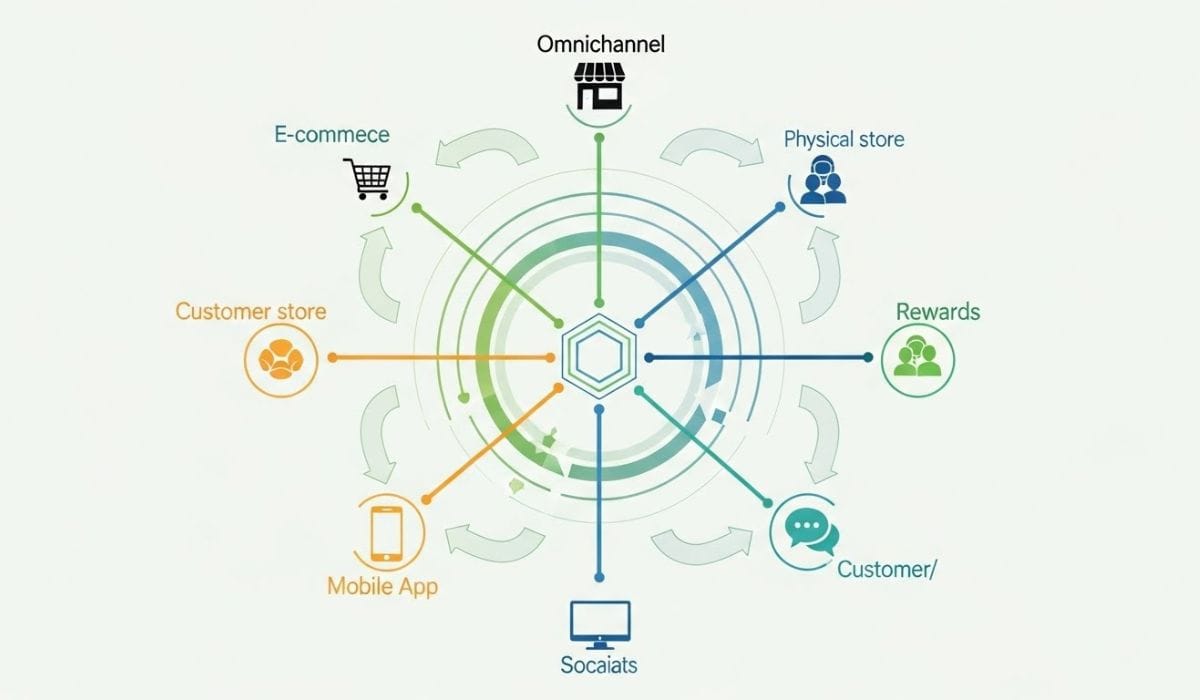
An omnichannel loyalty program integrates all points of contact between the customer and the brand, whether in a physical store, website, mobile app, email, social media, or point of sale. Instead of managing scattered interactions, data flows between all channels, enabling a unified experience.
This means that a customer can:
– Earn points when shopping in a physical store.
– Check their balance from an app or website.
– Receive personalized offers by email.
– Redeem rewards from the channel that is most convenient for them.
Omnichannel loyalty seeks to ensure that every interaction with the brand adds value, regardless of where it takes place.
Benefits of an omnichannel approach
a) Increased customer retention
Users remain more engaged when they can interact with the loyalty program across multiple channels without friction.
b) Comprehensive and actionable data
Centralizing information from all touchpoints provides a better understanding of customer behavior: which channels they use, which offers work, and which purchasing patterns are repeated.
c) More effective personalization
With unified data, it is possible to offer communications, rewards, and experiences that are more relevant to each customer profile.
d) Increased engagement
A program accessible from multiple fronts—app, store, email, website—encourages more frequent and continuous interactions.
e) Brand strengthening
Consistency across all channels contributes to a professional and modern brand perception, generating greater user confidence.
Steps to designing an omnichannel program
1. Identify key channels
Analyze where customers usually interact: physical store, e-commerce, social media, mobile app, email, or other touchpoints. This allows you to build a solid foundation for the program.
2. Choose an appropriate technological solution
It is essential to have a platform that centralizes data and allows you to manage interactions from different channels. Solutions such as Linkcard offer tools to administer loyalty programs, integrate them with the point of sale, and manage rewards from a single dashboard.
3. Define a unified rewards system
Customers should be able to earn points or benefits regardless of the channel used. The system should be consistent, easy to understand, and transparent.
4. Facilitate redemption across all channels
Customers should have multiple options for redeeming their rewards: in-store, from the app, through a digital code, or from the website.
5. Communicate how it works clearly
All channels should convey the same rules and benefits. Clear communication improves engagement and reduces confusion.
6. Analyze data and continuously optimize
An omnichannel program generates valuable information. Reviewing metrics on behavior, engagement, and conversions allows you to identify opportunities for improvement.
7. Integrate reactivation strategies
Actions such as notifications, reminder emails, or incentives for inactive customers can be implemented. These stimuli help maintain long-term interest.
Practical example: an omnichannel program in action
Let’s say a coffee shop wants to implement an omnichannel loyalty program.
– Channels identified: physical store, website, mobile app, and email communications.
– Technology used: a platform that integrates the point of sale, allows points to be accumulated, and offers a customer dashboard accessible from the app and website.
– Program mechanics: customers earn points for each purchase, for verified reviews, or for referring a friend.
– Redemption options: show a code from the app, enter a coupon on the website, or provide the customer number in the store.
– Communication: clear information in the store, tutorial in the app, and email reminders.
– Reactivation: send incentives to users who have been inactive for a long time.
– Analysis: review metrics to understand which rewards generate the most conversions and which channels need strengthening.
This approach allows for a smooth and unified user experience, regardless of whether they interact in the physical or digital world.
Common challenges
Although an omnichannel program offers multiple advantages, it also involves certain challenges:
– Technology and integration investment
It requires a platform capable of centralizing data without errors.
– Responsible data management
Proper privacy and security practices must be maintained.
– Consistency in communication
All channels must convey the same information and benefits.
– Program profitability
Rewards must be associated with sustainable margins.
The role of digital solutions such as Linkcard
Modern platforms allow you to implement loyalty programs with omnichannel components thanks to features such as:
– Integration with physical points of sale.
– Customer and rewards management from a single dashboard.
– Applications for users to check points and receive notifications.
– Tools for promotions, campaigns, and referrals.
– Centralized data for analysis and optimization.
These types of solutions facilitate the implementation and administration of an omnichannel program without the need for complex in-house development.
Conclusion
Creating a solid customer experience does not require complex tools or large web developments. With Linkcard, it is possible to build dynamic microsites that accompany the user throughout all stages of their journey, from discovery to loyalty.
The platform combines quick editing, clear metrics, and an adaptable structure, allowing any brand to offer professional and consistent communication without relying on additional technical resources.
In an environment where speed, clarity, and accessibility are essential, Linkcard positions itself as a centralized and efficient solution to improve digital presence and strengthen customer relationships, transforming every interaction into an opportunity to make an impact.
Share this on:
Continue reading

Why is retaining customers more important than just looking for new ones?
Many companies tend to focus their efforts on attracting new customers: investing in advertising, welcome discounts, or mass campaigns....

Linkcard is the best marketing tool for 2023
If you are one of those looking to enhance their business with the best marketing tool in 2023, we have just the tool for you, Linkcard...

How to increase engagement with your loyal customers
In an increasingly competitive market, having loyal customers is no longer enough: the key is to get those customers actively involved ...

How to Transfer Linkcards to Another Account (New Linkcard Feature)
Digital asset management requires increasing flexibility, especially when teams, agencies, or different managers within an organization...

Shortcut to your Linkcards in Android
Find out how to generate a shortcut to your Linkcards using the Chrome browser on your Android.Share this on

Testing to improve: how to use your Link in Bio for A/B testing
In the digital world, everything changes fast. What works today may not work tomorrow. That's why A/B testing is a key tool to optimize...

How to Improve Micro Landing Page Performance: Key Strategies to Boost Clicks and Conversions
Micro landings have become key tools for entrepreneurs, brands and professionals who wish to centralize their communication in a single...

Job hunting with Linkcard
Create microsites for resumes, CVs, and portfolios. Imagine having all your work information in one digital home, easy to access, edit ...

How to pick a color palette for your website
We rarely think about how much information color gives us, but the reality is that living in a colorful world means that each color hol...

Microsites for event organization and marketing
Use our templates to create unique event microsites for events. Handle invites, plan, and track your guests all in one place!Almost all...

How to make the most of SEO with a single-page site
Single-page sites are becoming a hot trend with users all over the world and it’s easy to see why.They are easier to create, provide an...

The loyalty strategy that ensures recurring revenue
In a context where customers are looking for real benefits and experiences that feel personalized, loyalty programs are evolving toward...

How Linkcard can help the healthcare sector improve its communication and digital experience
The healthcare sector is undergoing a process of constant digital transformation. Patients, professionals, medical centers, and compani...

How to Get Customer Reviews Using Linkcard
In a digital environment where online reputation increasingly influences purchasing decisions, receiving feedback and reviews from cust...

How to use AI to create magnetic offers (and sell more on key dates)
Today, creating an attractive offer is not just about the discount. It depends on how you communicate it, who you show it to, and what ...

Business Card & Email Signatures Deployment a step by step guide
A Step-by-Step Guide. Being ready to deploy means your company’s digital business cards and email signatures are ready in terms of desi...

Linkcard for Guerrilla marketing
Guerrilla marketing comes from the military term ‘guerrilla warfare’ which refers to a non-tactical force, with fewer constraints and o...

Use AI to enhance your Linkcards
In this article, we will explore how to integrate AI into every part of your Linkcard, what tools to use, and what strategies to apply ...

How to create amazing interactive digital happy holiday cards
The holiday cards are a great format to get your message across, from personal to business.Tis’ the season for holiday cheer and connec...

What type of website builder is best for you?
Not long ago you needed to have experience and knowledge in web development or coding in order to go live with a website.Now, thanks to...